

Understanding Attention-Deficit/Hyperactivity Disorder (ADHD)
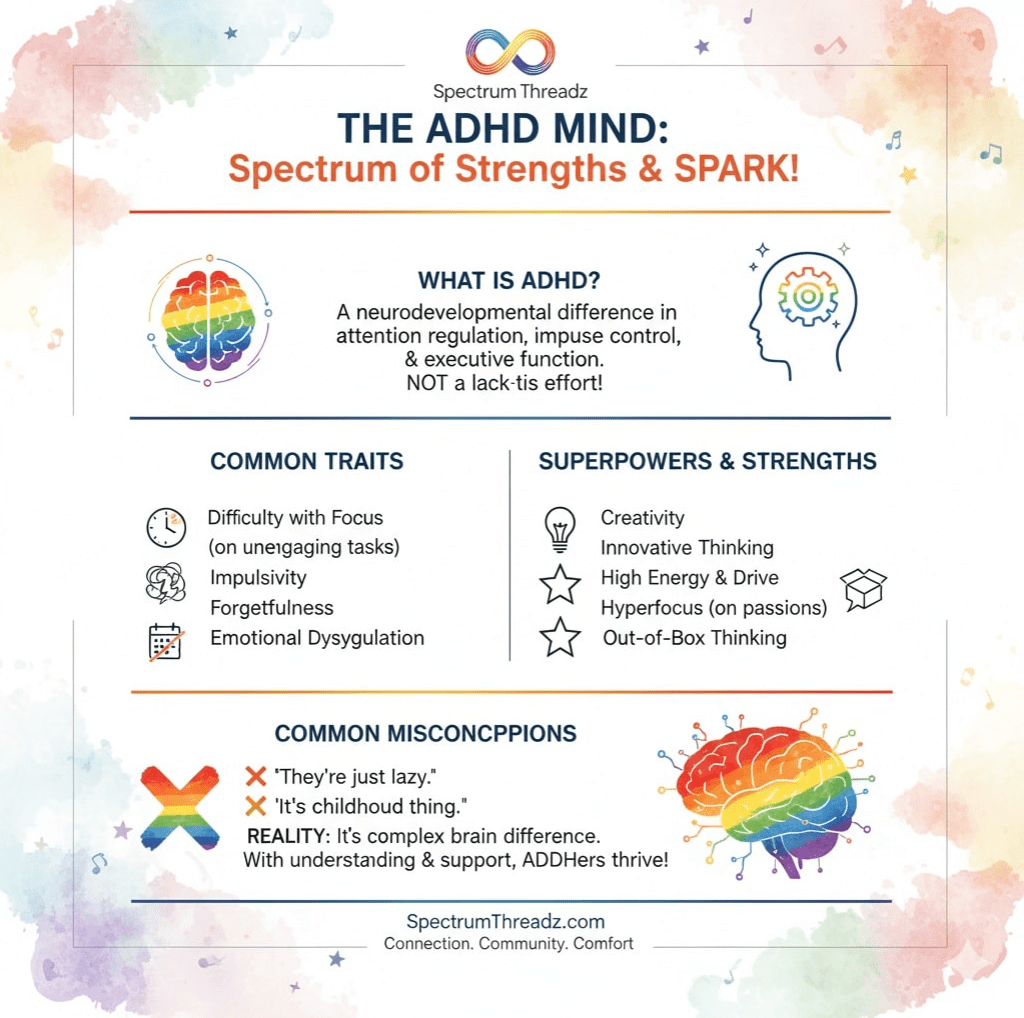
Attention-Deficit/Hyperactivity Disorder (ADHD) is a complex neurodevelopmental condition that affects how the brain manages executive functions, including attention, self-control, and impulse regulation. Like Autism Spectrum Disorder, ADHD is considered a part of neurodiversity, recognizing these differences in brain function as a normal human variation. It is a persistent, chronic condition that often begins in childhood and can continue through adolescence and adulthood.
ADHD is not a single condition but is classified into three main types, or presentations, which describe the most prominent symptoms an individual experiences:
1. Predominantly Inattentive Presentation (ADHD-I)
This type is characterized primarily by difficulty paying attention, disorganization, and trouble staying on task. Symptoms often include:
- Difficulty following instructions or finishing tasks.
- Frequent loss of items necessary for tasks or activities (e.g., keys, wallets, homework).
- Easily distracted by unrelated thoughts or stimuli.
- Appearing not to listen when spoken to directly.
- Avoiding or disliking tasks that require sustained mental effort.
2. Predominantly Hyperactive-Impulsive Presentation (ADHD-HI)
This type is dominated by hyperactive and impulsive behaviors, although it can be subtle in adults and manifest as restlessness. Symptoms often include:
- Fidgeting, tapping hands or feet, or squirming in their seat.
- Difficulty engaging in quiet activities.
- Excessive talking.
- Blurting out answers before questions are completed.
- Difficulty waiting their turn (impulsivity).
3. Combined Presentation (ADHD-C)
The most common type, where an individual meets the criteria for both inattentive and hyperactive-impulsive symptoms.
The Role of Executive Functions
The core difficulties in ADHD stem from differences in the brain’s executive functions, which are the set of mental skills that help a person get things done. These include:
- Time Blindness: Difficulty accurately perceiving and managing the passage of time.
- Working Memory: Trouble holding information in the mind to perform tasks.
- Emotional Regulation: Difficulties in controlling the intensity of emotional responses.
Strengths and Co-occurring Conditions
It is essential to recognize the unique strengths often associated with the ADHD brain:
- Hyperfocus: The intense ability to concentrate on tasks that are interesting or stimulating.
- Creative Thinking: A tendency towards innovative and “out-of-the-box” solutions.
- High Energy and Drive: Enthusiasm, persistence, and the ability to handle high-pressure situations.
However, ADHD frequently co-occurs with other conditions, most commonly anxiety, depression, and learning disabilities. ADHD is also often overlooked or misdiagnosed in girls and women, who may present with more subtle inattentive symptoms.
Effective management of ADHD typically involves a combination of medication, behavioral therapy, coaching, and educational support, enabling individuals with ADHD to harness their strengths and lead fulfilling lives.
Related Products

“Ferrari Brain” Heavyweight Hoodie – Oversized Neurodivergent Sweater
£40.005-Pack Neurodiversity Pin Buttons
£10.00ADHD – Your Childs Odyssey
Original price was: £9.99.£7.99Current price is: £7.99.ADHD Not Procrastinating T-Shirt
£20.00


