
What is Autism (ASD)?
1. Understanding Autism Spectrum Disorder
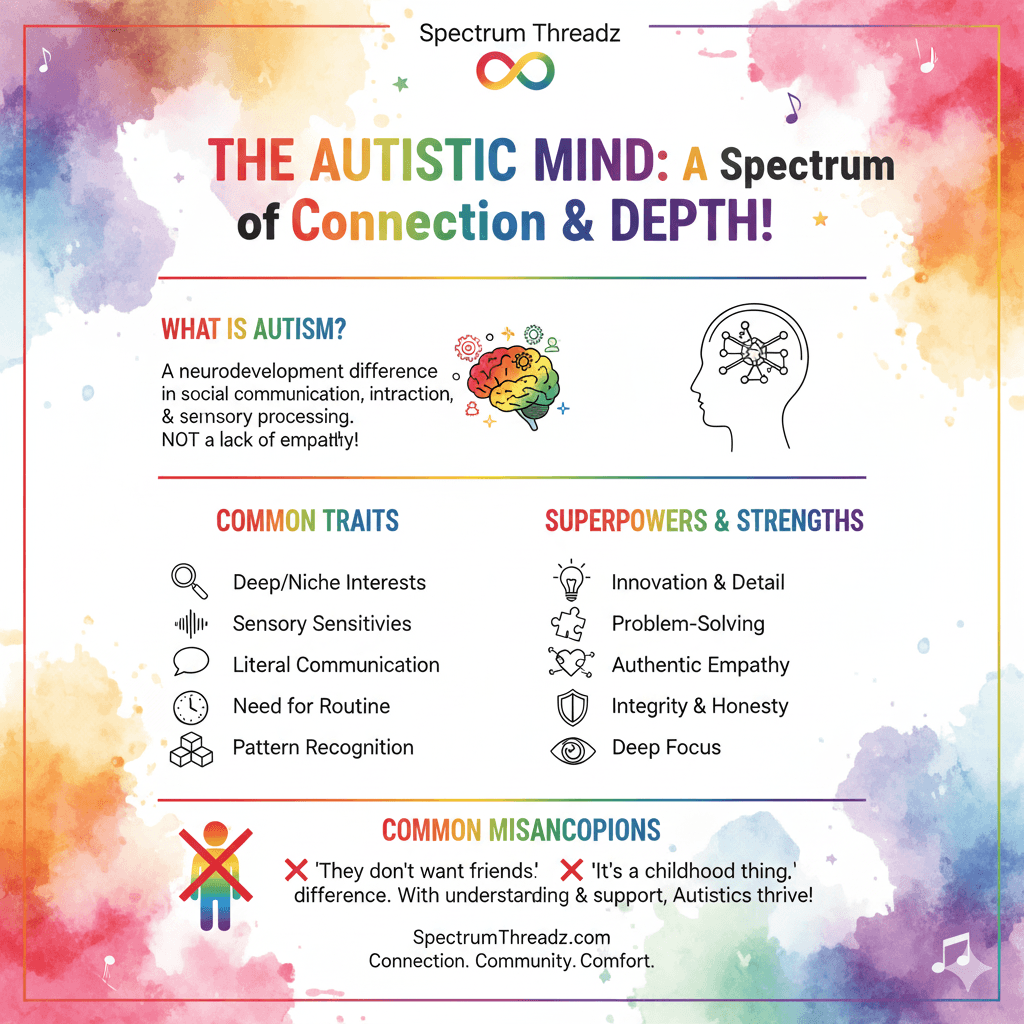
(ASD)Autism, or Autism Spectrum Disorder (ASD), is a lifelong neurological and developmental difference that influences how a person interacts with the world, communicates, learns, and behaves. It is considered a part of the broader concept of neurodiversity, which recognizes that differences in brain function are normal variations of the human population.
The term “spectrum” is crucial because it means autism affects each individual uniquely, with a wide range of strengths, challenges, and support needs.
2. Defining Characteristics and the Spectrum
The diagnostic criteria for ASD focus on two primary areas of difference:
- Challenges with Social Communication and Interaction: This can include difficulties with the subtle nuances of social situations, interpreting others’ feelings, making eye contact, and understanding non-verbal cues like tone of voice or body language. Some autistic people may be nonverbal or minimally verbal, while others can speak but may have unique communication styles.
- Restricted and Repetitive Patterns of Behaviour, Interests, or Activities: This can manifest as an insistence on routines, becoming distressed by unexpected changes, highly intense or “special” interests, and repetitive movements (often called “stimming”) used for self-regulation or expression. Sensory sensitivities are also common, where an individual may be either hyper-sensitive (overreactive) or hypo-sensitive (underreactive) to sounds, lights, textures, or smells.
It is important to understand that while these traits are required for a diagnosis, the severity and combination of them vary widely. Some autistic people live entirely independently, while others require life-long care and support.
3. Strengths and Co-occurring Conditions
Viewing autism through a strength-based lens highlights many positive traits.
- Deep Focus (Hyperfocus): The ability to concentrate intensely on a subject, topic, or task for extended periods, especially those related to a special interest.
- Attention to Detail: Exceptional precision and a focus on minute details, often leading to strong skills in systemizable domains like STEM fields.
- Creative Thinking: A tendency to think outside the box and generate unique or novel ideas.
- Honesty and Integrity: A strong sense of honesty, loyalty, and adhering to rules.
However, people with autism frequently experience co-occurring physical and mental health conditions. These can include anxiety, depression, attention-deficit/hyperactivity disorder (ADHD), and gastrointestinal issues.
4. Common Misconceptions
Several persistent myths surround autism that must be challenged:
- Myth: Autism is caused by vaccines. This has been scientifically and ethically debunked.
- Myth: Autistic people are anti-social. While they may find social situations overwhelming or confusing due to differences in processing, this does not mean they lack a desire for friendship or connection.
- Myth: Only boys are autistic. Although boys are diagnosed more often, girls are frequently underdiagnosed or misdiagnosed because they may “mask” their symptoms or present in more subtle ways.
Ultimately, autism is a developmental difference that impacts the whole person throughout their lifespan. Recognition and understanding of the unique ways autistic people process the world are vital steps toward fostering greater accessibility, inclusion, and support.
Further Reading
Related Products

“Ferrari Brain” Heavyweight Hoodie – Oversized Neurodivergent Sweater
£40.005-Pack Neurodiversity Pin Buttons
£10.00ADHD – Your Childs Odyssey
Original price was: £9.99.£7.99Current price is: £7.99.ADHD Awareness T-Shirt
£20.00