

Neurodiversity Explained: Honest Answers for Complex Minds
Introduction: If you’ve just heard the word “neurodiversity” thrown around—or you’re trying to understand how your own brain fits into the puzzle—it can be overwhelming.
You’ll find academic papers that are impossible to read. You’ll find arguments about terminology. And you’ll find a lot of confusion about what is “normal.”
At Spectrum Threadz, we believe that understanding human variation shouldn’t be a headache. You deserve answers that are clear, inclusive, and practical. We have compiled this Guide to Neurodiversity to break down the definitions, challenge the stigma, and help you navigate the world with a new perspective. No gatekeeping. No judgment. Just the truth.
Part 1: The Basics (What Is It?)
1. What Is Neurodiversity? (And What Does “Neurodivergent” Mean?)
Is it a movement? A biological fact? A political stance? We strip away the complexity and explain the basic concept: that there is no “correct” way for a brain to function. [Read Article >]
2. The Vocabulary: Neurodiverse vs. Neurodivergent vs. Neurotypical
Getting the words right matters. Learn the difference between a “neurodiverse” group and a “neurodivergent” individual, and why language is a powerful tool for advocacy. [Read Article >]
3. The Spectrum of Minds: Examples of Neurodivergence
It’s not just Autism and ADHD. We explore the wide umbrella of neurodivergence, including Dyslexia, Dyspraxia, Tourette’s, and other conditions that shape how we experience the world.[Read Article >]
4. The Overlap: Can You Be More Than One Type?
Spoiler: Yes. In fact, it’s arguably more common to have a “cocktail” of conditions than just one. Learn about co-occurrence and why your diagnosis might only be part of the picture. [Read Article >]
Part 2: The Myths (Busting the Stereotypes)
5. The “Disability” Debate: Is Neurodivergence a Disability?
Some say it’s a superpower; others struggle to get through the day. We tackle the nuanced reality of the social model of disability and why acknowledging the struggle doesn’t erase the strengths. [Read Article >]
6. The Lies We Need to Stop Believing
From “everyone is a little neurodivergent” to “it’s just a trend,” we debunk the most persistent myths that invalidate our experiences and stall progress. [Read Article >]
7. The Cure Myth: Is There a Cure?
(And why there shouldn’t be). We explain why the goal of neurodiversity is acceptance and accommodation, not “fixing” brains that aren’t broken. [Read Article >]
Part 3: Identification & Support (The Inner Experience)
8. The Big Question: How Do I Know If I’m Neurodivergent?
Do you feel like everyone else received a manual for life that you missed? We look at the common threads of the neurodivergent experience and how to start your journey of self-discovery. [Read Article >]
9. Strengths & Struggles: What Are the Common Challenges?
It’s a two-sided coin. We dive into the unique strengths (like hyper-focus and creativity) and the common hurdles (like sensory overwhelm and executive dysfunction). [Read Article >]
10. Real Support: What Do Neurodivergent People Actually Need?
Forget puzzle pieces and awareness ribbons. We discuss the tangible, practical support that actually makes a difference—from sensory-friendly environments to clear communication. [Read Article >]
11. Thriving Together: How to Help Your Child or Partner
Loving a neurodivergent person means learning their language. Here is your guide to building a relationship based on understanding, patience, and mutual respect. [Read Article >]
Part 4: The Real World (Workplace & Society)
12. The 9-to-5: Should I Disclose My Neurodivergence at Work?
It’s a personal choice with big implications. We weigh the pros and cons of disclosure and offer advice on how to protect yourself while advocating for your needs. [Read Article >]
13. Better Hiring: How to Fix Recruitment for Neurodivergent Talent
Traditional interviews are often designed to weed us out. We look at how companies can change their hiring practices to find the talent they are currently missing. [Read Article >]
14. Genuine Support: Creating Inclusive Workplaces
It takes more than a “Mental Health Awareness” seminar. Learn how to genuinely support neurodivergent employees through flexibility, clear expectations, and sensory considerations. [Read Article >]
15. Breaking the Stigma: How We Change the Narrative
Stigma thrives in silence. We explore how open conversations and education can dismantle the barriers that keep neurodivergent people on the margins. [Read Article >]
16. The Conversation: How to Talk About Neurodiversity
Whether it’s explaining it to your child, your manager, or your friend, we offer scripts and tips for having the “neurodiversity talk” without the awkwardness. [Read Article >]
Part 5: The Bigger Picture (Research & Intersectionality)
17. The Missing Pieces: Women and Girls
For decades, research focused on boys. We examine the gender gap in diagnosis and how we can improve understanding for neurodivergent women and girls. [Read Article >]
18. Intersectional Identity: Race, Gender, and Neurodiversity
Neurodivergence doesn’t happen in a vacuum. We look at the crucial need to support marginalized communities and ensure the neurodiversity movement includes everyone. [Read Article >]
Finding Your Comfort Zone
Understanding your brain is the first step. Making your body comfortable is the second. Many of the struggles of neurodivergence are triggered by sensory pain.
Explore the questions below to find your answers.
Browse our Collection to find clothing designed by neurodivergent people, for neurodivergent people. No tags. No seams. Just peace.
Browse Common Autism Questions
Support, Care, and “Cures” – What Do Neurodivergent People Actually Need?

Support, Care, and “Cures” – Is there a cure for neurodiversity?
Support, Care, and “Cures” – How to Help Your Child or Partner Thrive
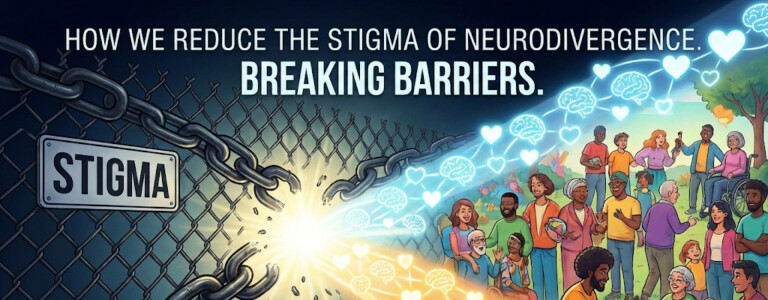
Social and Cultural Aspects – How We Reduce the Stigma of Neurodivergence
Social and Cultural Aspects – How do I talk to my child/manager/friend about neurodiversity?

Research Priorities – How can we improve understanding and diagnosis for women and girls?

Research Priorities – How can we better support marginalized communities (race, gender) within neurodiversity?

Relationships – Honest Guide to Neurodiverse Relationships

Parenting – Guide to parenting a teenager with OCD

Neurodiversity in the Workplace – Should I Disclose My Neurodivergence at Work?

Neurodiversity in the Workplace – How to Genuinely Support Neurodivergent Employees