Myth vs. Mind: What Is Neurodiversity & What Does “Neurodivergent” Mean?
In a world that often demands we all march to the same beat, discovering that your drum has a different rhythm can be both a relief and a revelation. You might hear terms like “neurodiversity” and “neurodivergent” thrown around in workplaces, schools, and social media feeds. But stripped of the buzzwords, what do they actually mean for you, your child, or your partner?
Let’s break it down simply, honestly, and without the medical jargon that often makes these topics feel clinical rather than human.
What Is Neurodiversity?
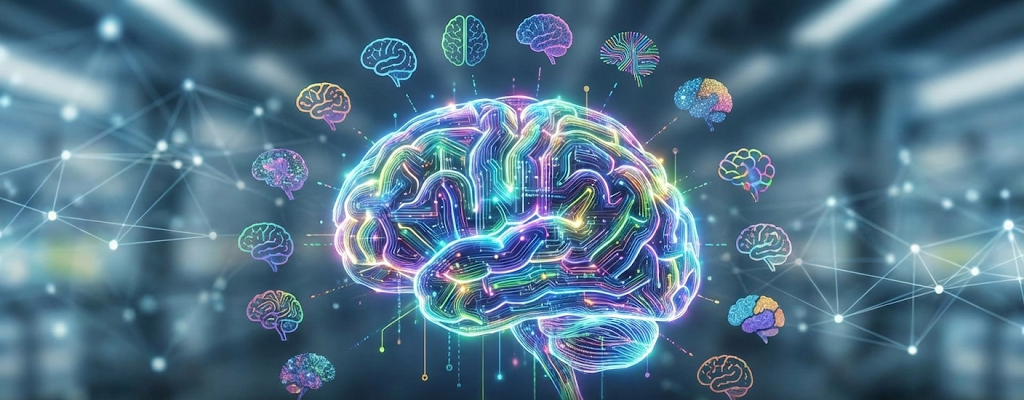
Neurodiversity is the simple biological fact that there is infinite variation in how human minds function. Just as we have different heights, eye colors, and blood types, we have different wiring in our brains.
For decades, society operated on the assumption that there was one “right” way to think, learn, and process the world (often called “neurotypical”). Anything deviating from that standard was viewed as a disorder or a deficit—something to be “fixed.”
The neurodiversity paradigm flips the script. It recognizes that differences in brain function—whether it’s the hyper-focus of ADHD or the sensory intensity of Autism—are not broken versions of “normal.” They are simply natural variations of the human genome.
Key Takeaway: Neurodiversity refers to everyone collectively. The entire human race is neurodiverse because no two brains are alike.
What Does “Neurodivergent” Mean?
While “neurodiversity” describes the whole population, neurodivergent describes an individual.
If you are neurodivergent, it means your brain functions, learns, and processes information differently than the dominant “neurotypical” standard. It’s not a bad thing; it’s just a different operating system.
You might be neurodivergent if you identify with conditions such as:
- Autism (ASD): Processing sensory information and social communication uniquely.
- ADHD: navigating a brain that seeks dopamine, often fluctuating between high energy and distraction or intense “monotropic” focus.
- Dyslexia, Dyspraxia, & Dyscalculia: Learning and moving in ways that don’t always align with traditional classroom methods.
- Tourette Syndrome: Experiencing involuntary tics that are part of your neurology, not a behavioral choice.
Terms like “Neuro-spicy” or “Wired Differently” (which you’ll often see on our Spectrum Threadz apparel) are affectionate community terms used to reclaim these differences with pride rather than shame.
The Difference Between “Having” and “Being”
Compassion starts with language. You don’t “have” neurodivergency in the same way you “have” a cold. You are neurodivergent. It is woven into the fabric of who you are.
This is why we focus so heavily on acceptance rather than “cures.” When we understand that a meltdown isn’t “bad behavior” but a reaction to sensory overwhelm, or that “zoning out” isn’t laziness but a brain recharging its battery, we can stop fighting our biology and start working with it.
Why It Matters
Understanding these terms is the first step toward unmasking—the process of dropping the exhausting act of pretending to be neurotypical.
The world isn’t always built for us. It’s full of scratchy tags, fluorescent lights, and unwritten social rules. That’s why finding your tribe and your tools is essential. Whether it’s wearing a “Social Battery Low” hoodie to set boundaries without speaking, or using a sensory-safe desk mat to ground yourself while gaming, acknowledging your neurodivergence allows you to advocate for what you need.
Being neurodivergent doesn’t mean you are broken. It means you are part of a vast, vibrant spectrum of minds that view the world from a unique, necessary angle.