
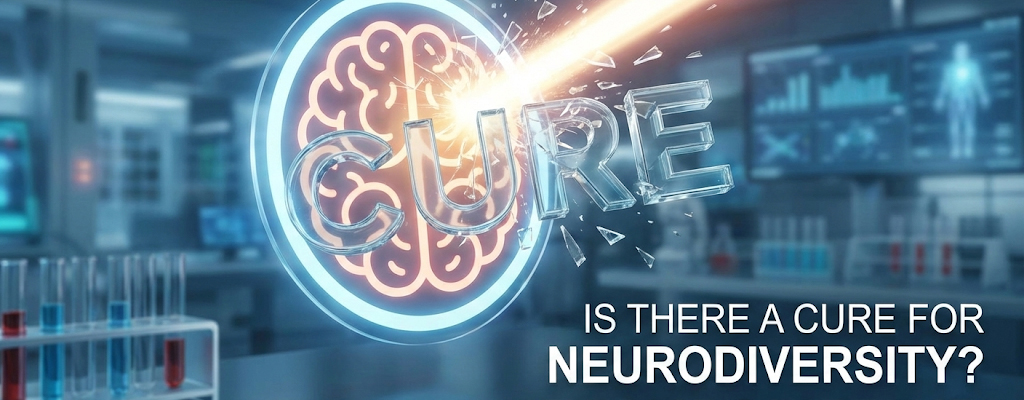
Is There a Cure for Neurodiversity? (And Why That’s the Wrong Question)
The short, honest answer is: No.
And the more important follow-up is: We generally don’t want one.
Neurodiversity—whether it is Autism, ADHD, Dyslexia, or Tourette’s—is not a disease. It is not an injury. It is a fundamental part of how a human brain is wired. You cannot “cure” it any more than you can “cure” being left-handed, tall, or having green eyes.
Hardware, Not Software
Think of a computer. A “cure” implies there is a virus in the system that needs to be removed.
Neurodivergence isn’t a virus; it’s the operating system.
If you are running on iOS (Neurotypical) and your friend is running on Android (Neurodivergent), your friend isn’t “broken.” They just process data differently. Trying to “cure” them would mean fundamentally erasing who they are to make them act like you.
The Danger of the “Cure” Mentality
For decades, therapies focused on “fixing” us. They tried to force Autistic kids to stop flapping their hands (stimming) or force ADHD kids to sit perfectly still.
We now know this causes trauma. It doesn’t change the brain; it just forces the person to hide their struggle. This leads to shame, anxiety, and burnout.
Support vs. Cures
While we don’t need a cure for who we are, we often need support for how we struggle.
There is a big difference between “curing Autism” and “managing sensory overload.”
- We don’t want to change our brains. The creativity, the passion, and the unique perspective are gifts.
- We DO want to reduce the friction. We want help with executive dysfunction, anxiety, and navigating a world that isn’t built for us.
The Real Goal: Acceptance
The goal isn’t to make a neurodivergent person appear “normal.” The goal is to help them be happy, healthy, and functional.
This means replacing the search for a “cure” with the search for tools:
- Using noise-canceling headphones to manage sound.
- Using medication (if chosen) to help regulate ADHD dopamine levels.
- Wearing comfortable clothing (like our Spectrum Threadz collection) to reduce sensory rage.
The world doesn’t need fewer neurodivergent people. It needs a better understanding of them. You are not a problem to be solved; you are a person to be understood.